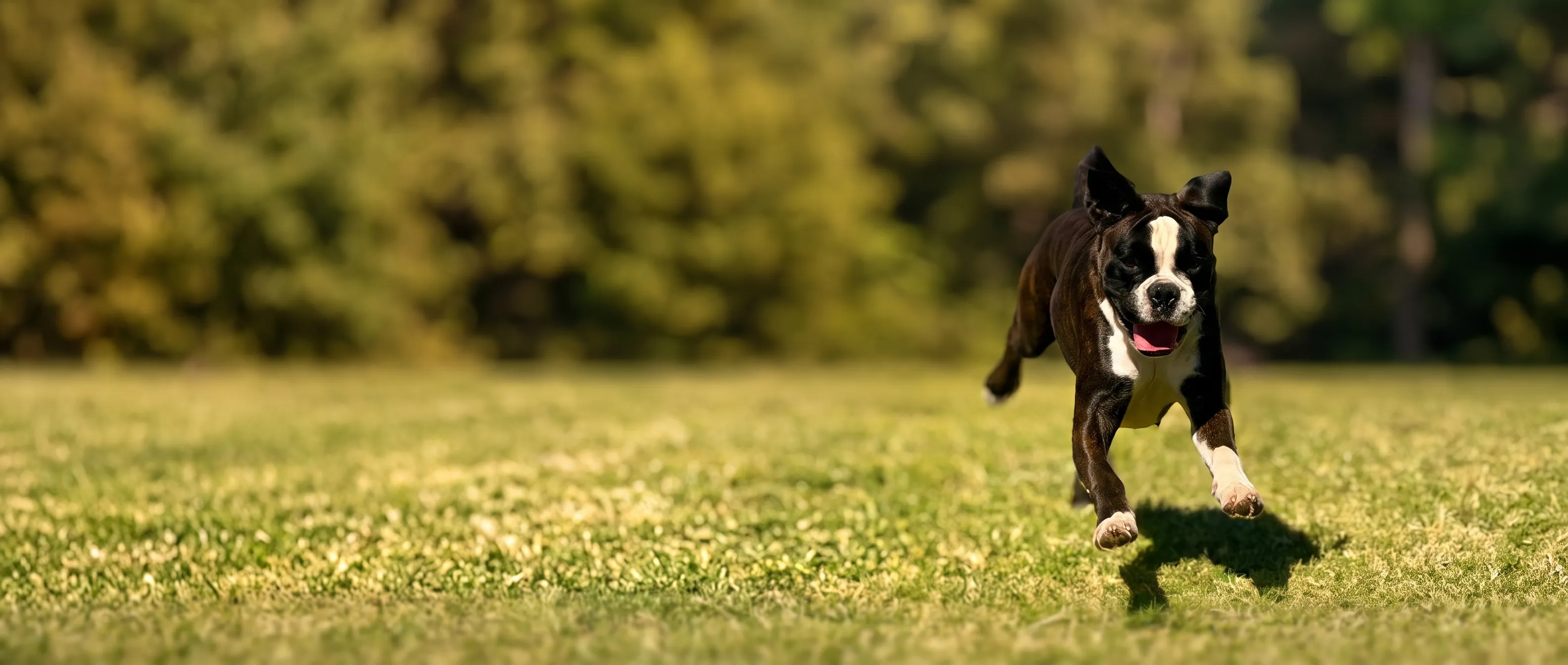
Big personality, bigger heart
Everything you need to know about the breed before falling in love with one of ours.
The Boxer is one of those breeds that stops people in the street — partly because they look like someone carved them out of marble, and partly because they're usually doing something ridiculous that makes you laugh.
The History of the Boxer
Boxers act like clowns, but they descend from a noble breed with a serious purpose. Bred in Germany in the late 1800s, they were scaled down from a massive hunting dog called the Bullenbeisser — used to hunt bear, boar, and bison — into something more practical for police and military work. They weren't originally bred to be pets.
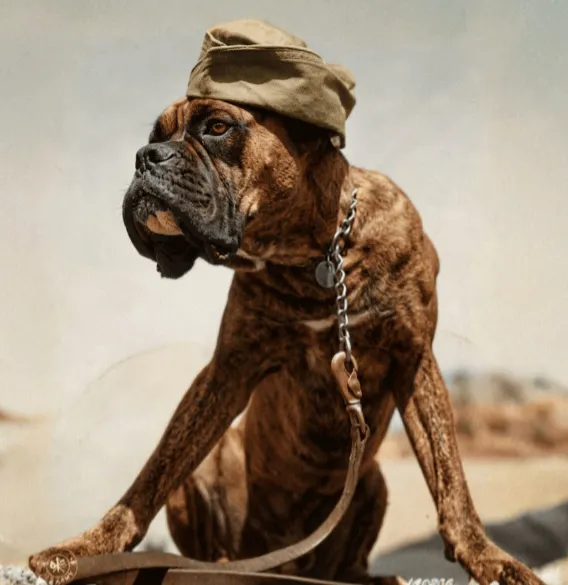
Legend has it Boxers made their way into pet life after serving as message-runners in World War I, delivering communications back and forth in the trenches. By day they were disciplined and fast, keeping army commanders connected; by night they were companions and entertainers for soldiers far from home. When the war ended, many of those soldiers brought their new best friends home — and for the past hundred years, Boxers have been winning hearts and homes, generation after generation. Once a family has a Boxer, there's really no turning back.
The Temperament of a Boxer
Don't let the goofiness fool you — and don't let the serious face fool you either. Boxers are neither one thing nor the other; they're both, because they love their humans completely.
Boxers are first and foremost people-pleasers, deeply attuned to their humans' moods, and they will want to be with you all the time — yes, all the time, even when you go to the bathroom. They're born entertainers who'll make you laugh whether you want to or not, and just as happy to be a pillow or a cuddle buddy instead. But they're also capable of real responsibility: Boxers have worked in policing for over a century and excelled at urban search and rescue, including our own Wellington, Australia's first USAR Boxer.
We talk to every new puppy family about “purpose” — a Boxer is at their best when they know their role in the family and feel secure in their place. With gentle, consistent training and playtime, a Boxer puppy becomes not just the family dog, but the family member everyone genuinely likes.
Velcro Loyalty
Deeply attuned to their humans' moods, wanting to be with you constantly through every moment of the day.
Born Entertainers
Clownish humor balanced with a gentle cuddle buddy spirit that keeps your home laughing every day.
Capable Purpose
Proven search and rescue and family watchdog capabilities when given gentle structure and security.
The Looks of a Boxer
Colours & Flash
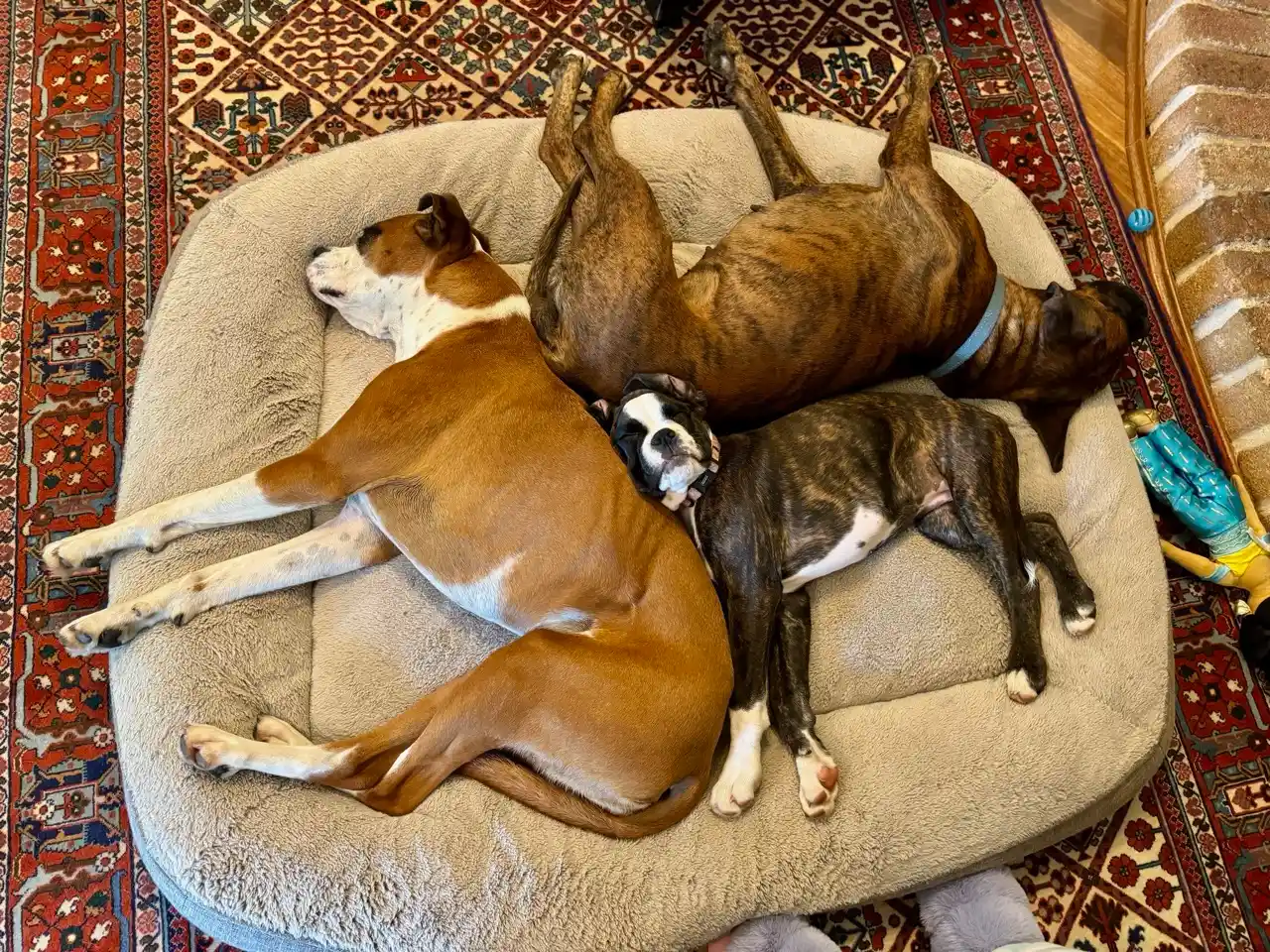
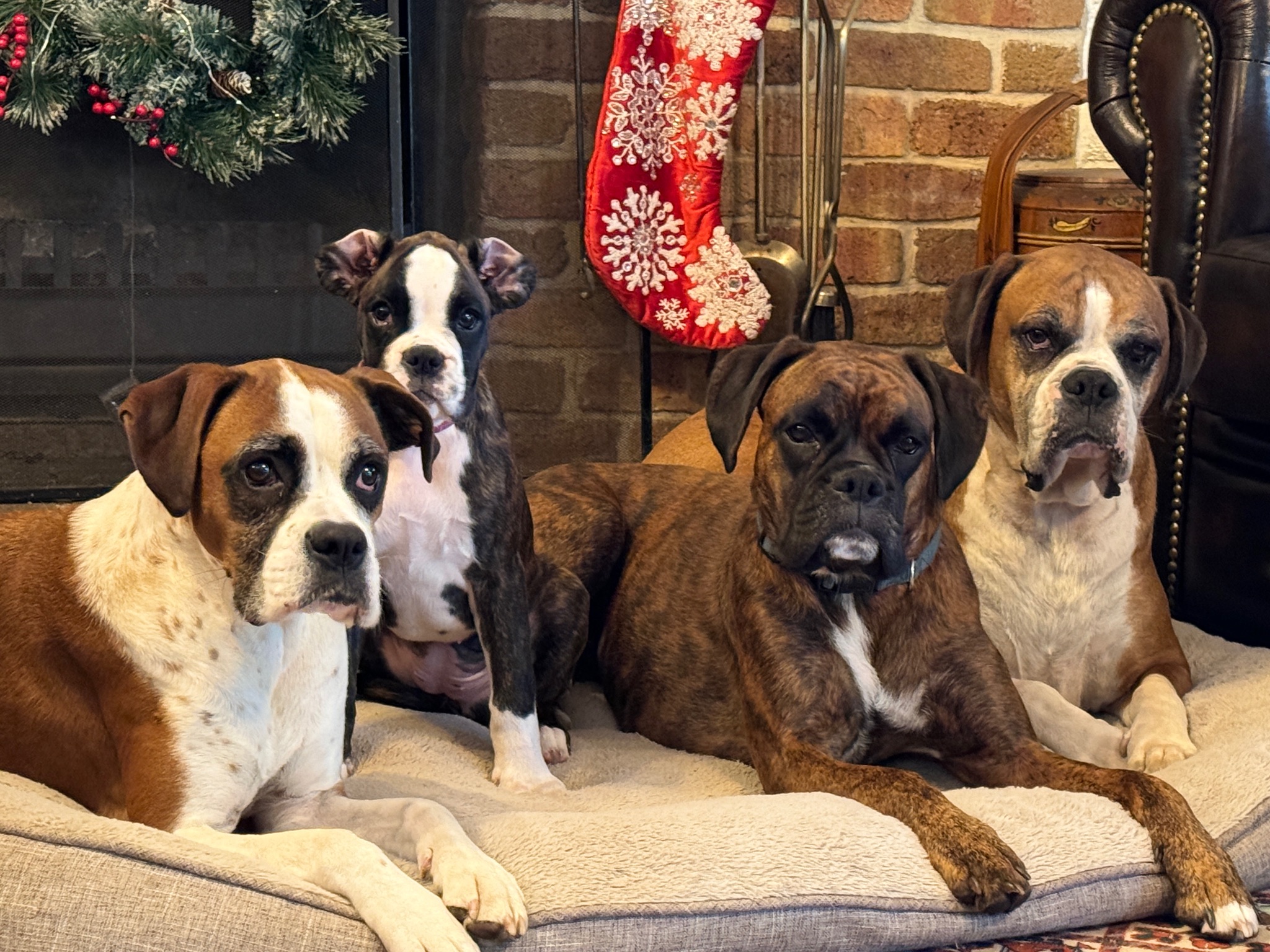
Fawn & Brindle: Boxers come in two main colours, fawn (red) and brindle. Fawn ranges from pale tan to deep mahogany; brindle is dark tiger-stripe markings on a fawn base. Sometimes those stripes are sparse and the dog reads mostly red with a few tiger markings; sometimes they're dense enough that the dog looks almost black — called a sealed brindle.
Flash & Markings: “Flash” refers to white markings on the chest, legs, and face. Flashy Boxers have plenty of white; solids have very little. White Boxers (essentially all flash) are accepted for conformation showing by the AKC but not in Australia. At Fairytail, we aim to breed brindle to red, flashy to solid, to give us the best mix of colours in a litter.
Body Type & Tails
Regional Styles: Over the past few decades, distinct Boxer types have evolved. German/European Boxers are stockier and heavier-boned. American Boxers are taller, leaner, and tighter-skinned, with a broader muzzle. The UK style sits in between — elegant and light on their feet.
The Fairytail Type: At Fairytail, we breed toward the American style for athletic balance and elegance. We also breed exclusively long-tailed Boxers — because we believe a wagging tail is the Boxer's smile.
Is a Boxer Right For Us?
Be honest with yourself about your lifestyle. Boxers are not a low-maintenance breed. This isn't a dog who's happy lying on the couch all day, and they won't be happy living in the garden with limited human time either — they want to be a valued, engaged member of the family, and that takes real training investment in the first few months.
They live around 10 to 12 years, and in that time they'll need plenty of exercise — think one to two hours a day. They're not a quick-wander-around-the-block kind of dog; they need to run, play, and burn off that energy, or they'll find their own entertainment, usually by redecorating your house.
Size-wise, males stand around 58 to 63cm at the shoulder, with American-style dogs weighing roughly 30 to 35kg; females are a little smaller. They're solid, muscular dogs who can accidentally knock over a small child or a glass of wine with an enthusiastic tail wag.
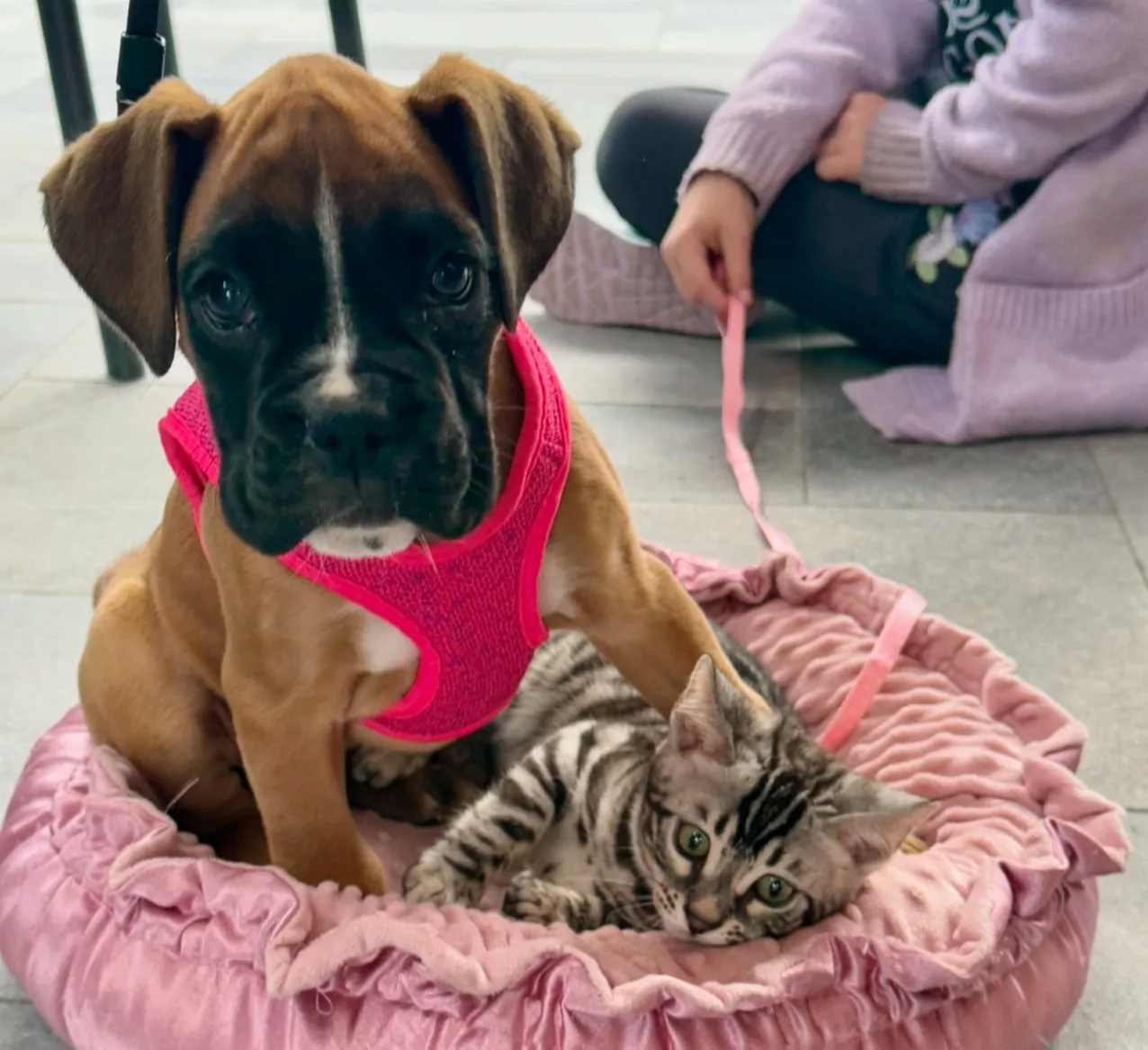
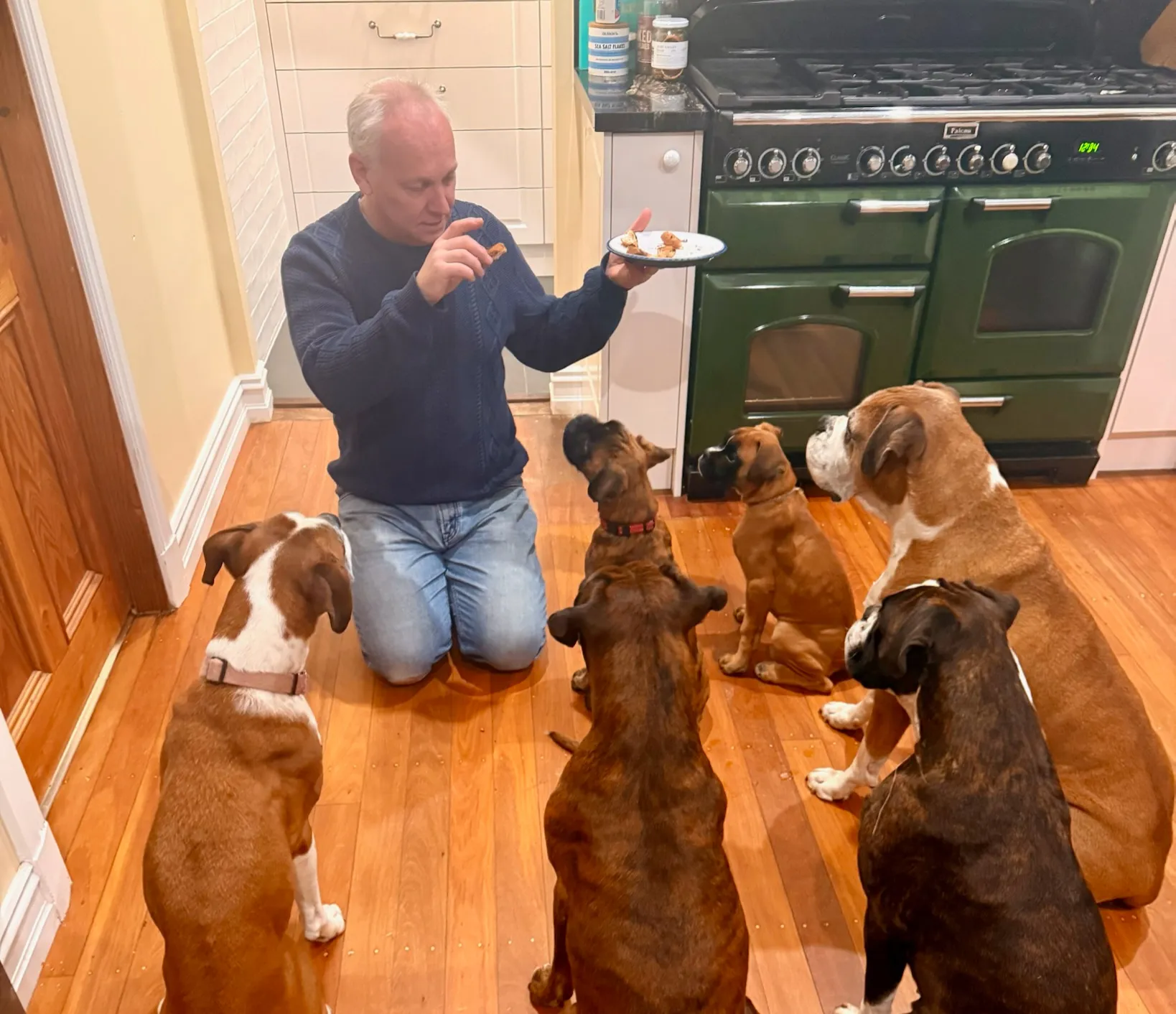
Boxers are wonderful with young children, though given their size, extra caution is warranted around toddlers to avoid an accidental rugby tackle. They show very little aggression unless they or the people they love are genuinely threatened. They're social animals who enjoy the company of other dogs — and, with training, cats. Our six Boxers live alongside our cats, playing and lying together (with the occasional incident of a puppy climbing the cat tree to be closer to their favourite friend). It comes down to training and socialisation.
If you can match their energy, handle their goofiness, and give them the structure they need, a Boxer will reward you with loyalty that borders on ridiculous. They're absolutely worth the effort.
10–12 years lifespan. Requires 1–2 hours of active exercise, running, and play daily.
Males: 58–63cm shoulder height, 30–35kg. Females slightly smaller. Muscular, athletic builds.
Gentle with children and highly social with other pets when socialised early.
Is a Boxer Right For You?
Answer a few quick questions about your lifestyle and we'll give you an honest sense of whether a Boxer is the right match for your home.
Is a Boxer right for you?
1. How much daily exercise can you realistically give a dog?
2. How much time will the dog spend with the family each day?
3. How do you feel about training in the first few months?
4. A dog that's goofy, clownish and always wants your attention…
5. How do you feel about a solid, energetic dog around the home?
6. Boxers live 10–12 years. How do you view that commitment?
0 of 6 answered
Hear about our next litter before anyone else.
No pressure, no waiting list, no deposits until you're ready. Just an honest way to follow along.